
2025 Nobel Prize in Economics Selections Tie Innovation to Economic Prosperity
Oct 15, 2025
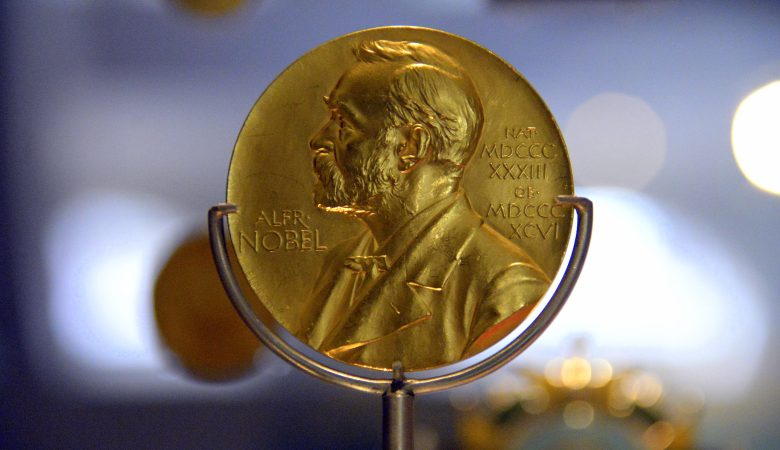
The 2025 Nobel Prize in Economics was awarded this week, highlighting the work of three economists and their contributions to exploring the connection between innovation and sustained economic growth. Joel Mokyr received half the prize for his work identifying the mechanisms that have enabled sustained growth since the Industrial revolution, while Philippe Aghion and Peter Howitt split the remaining half for their 1992 paper modeling the innovative process of “creative destruction.”
The selection of Joel Mokyr, Philippe Aghion and Peter Howitt demonstrates the continued importance of innovation and the institutions that allow innovators to thrive.
Economic historian and professor at Northwestern University Joel Mokyr won the award for his work on identifying the conditions for sustained economic growth. As he notes, prior to the industrial revolution, innovations often lacked a clear effect on long-term growth, while modern economies are largely driven by continuous technological innovation. His research centered on analyzing this change, breaking ground on explaining the innovation-based model of economic growth.
He proposed that the merging of prescriptive knowledge (the understanding of how things work) and propositional knowledge (the understanding of why things work), through the advancement of science and mathematics, has enabled innovators to create at a far more rapid pace.
Mokyr also argued that advancements in institutions promoting innovation—such as judicial arbitration, expanded property rights, and intellectual property protections—allowed society to be more receptive to technological innovations and less resistant to change.
Philippe Aghion and Peter Howitt expanded on Mokyr’s work, constructing the first model to show an equilibrium process of creative destruction. They found that two market forces emerge to sustain adequate levels of R&D to enable growth.
The first force is profit incentive—firms expect a return for their research spending. When they successfully innovate, they temporarily hold monopolistic profits over the new innovation. The second force is creative destruction, the idea that as a firm iterates on a technology it displaces the previous innovator.
This process of innovation and displacement incentives continuous innovation and competition between firms, resulting in sustained growth. However, this cycle can only continue for as long as governments and society remain open to innovation and change, protecting the rights of innovators through the enforcement of robust intellectual property frameworks. Without these protections, innovators lose control of their creations, its profit incentive, and the motivation to continue iterating on old technologies.
With the emergence of new disruptive technologies, the work of Joel Mokyr, Philippe Aghion and Peter Howitt crucially demonstrates that the transitional harms of innovation are far exceeded by its benefits to society—as long as we continue to maintain the institutions and protections that enable them.